跳到内容
跳到内容 
Many brands want packaging with transparent windows. Yet many buyers struggle to decide whether PET or PLA is the better choice for sustainability, performance, and cost.
PET and PLA are the two most common transparent window films used in paper packaging. PET offers stronger durability, wider recycling acceptance, and lower costs. PLA offers renewable sourcing and industrial compostability. The right choice depends on packaging goals, local waste systems, and product requirements.
I often discuss window packaging with buyers who want consumers to see the product before opening the box. Most people focus on box structure, printing, and finishing first. The window film usually becomes a discussion later. That is where many packaging decisions become more complicated.
PET vs PLA Window Films: What Are the Main Differences?
PET and PLA window films may appear similar, but they differ fundamentally in dimensional stability, ocean-freight heat resistance, and factory scrap rates. PET delivers reliable high-speed gluing performance and lower unit costs. PLA provides an industrially compostable alternative strictly for brands prioritizing renewable sourcing over supply chain durability.
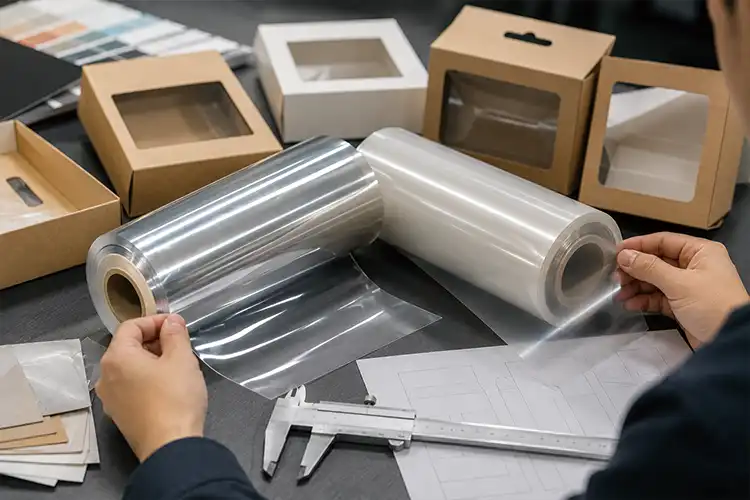
PET vs PLA Window Film Comparison
PET and PLA solve different packaging needs. Many buyers assume they are direct substitutes because both materials create a transparent window. In practice, they serve different priorities.
What Is PET Film Commonly Used For?
Polyethylene terephthalate 1 remains the most common window film in commercial packaging. I see it used in chocolate boxes, cosmetic cartons, gift packaging, bakery boxes, and retail packaging.
Brands often choose PET because it offers:
| Property | PET Film |
|---|---|
| Transparency | Excellent |
| Durability | Excellent |
| Heat Resistance | Good |
| Cost Efficiency | High |
| Availability | Widely Available |
PET performs well during production and transportation. It also maintains excellent product visibility on retail shelves.
Why Do Some Brands Choose PLA?
PLA is made from renewable resources such as corn starch or sugarcane. Many brands choose PLA because they want their packaging materials to align with their environmental messaging.
| Property | PLA Film |
|---|---|
| Renewable Source | Yes |
| Compostable | Industrial Conditions |
| Transparency | Very Good |
| Cost | Higher |
| Availability | More Limited |
The biggest difference is not appearance. The biggest difference is the sustainability story each material supports.
Which Window Film Is More Sustainable and Recyclable?
PLA is made from renewable resources and can be industrially composted under specific conditions. PET is produced from fossil-based materials but benefits from broader recycling infrastructure in many regions. The more sustainable option often depends on local waste management systems rather than material origin alone.
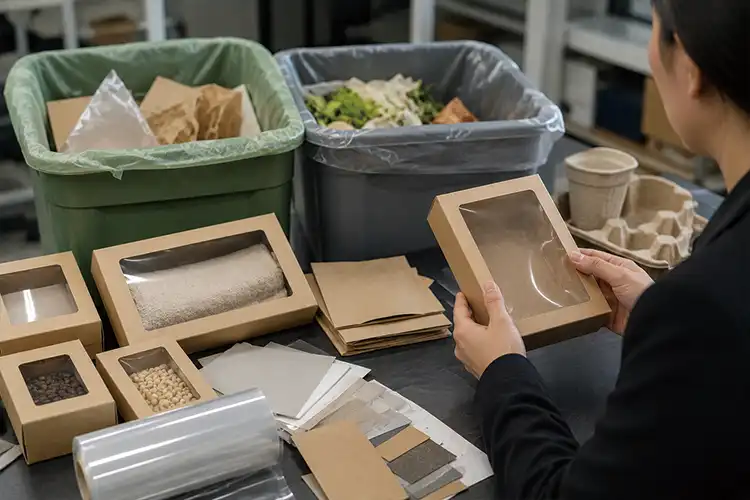
Recycling and Composting Comparison
Many packaging discussions stop at a simple statement: PLA is plant-based and PET is plastic. I believe the real answer is more complicated.
Does Plant-Based Always Mean More Sustainable?
Not necessarily.
A plant-based material can offer advantages during production. However, the environmental outcome also depends on what happens after the package is discarded.
Many regions still lack [industrial composting infrastructure](ttps://bpiworld.org/Composting](https://bpiworld.org/Composting) 2. If PLA enters a landfill, some of its environmental advantages may not be fully realized.
However, material origin is only one part of the sustainability discussion. I explored this topic in more detail in my article on What Makes a Box Truly Eco-Friendly? Materials, Certifications & Lifecycle.
Why Is PET Still Considered by Many Sustainable Brands?
PET benefits from established recycling systems in many countries.
Last year, a boutique organic skincare brand insisted on PLA windows for their holiday sets to match their 'green' aesthetic. We ran a fast 3-day sample run for them to compare both materials. While the PLA looked great, they realized their end-users were throwing it into standard recycling bins, effectively contaminating the local PET recycling streams.
Furthermore, the custom PLA thickness required a massive MOQ that tied up their cash flow. We successfully pivoted them back to recyclable PET with our standard 100 MOQ, avoiding a PR headache and keeping their launch on budget.
That experience reminded me that sustainability decisions should consider the entire packaging lifecycle.
| Sustainability Factor | PET | PLA |
|---|---|---|
| Renewable Source | No | Yes |
| Recyclable Infrastructure | Stronger | Limited |
| Compostable | No | Yes |
| Market Availability | Higher | Lower |
The best environmental choice depends on how the package will actually be handled after use.
Which Window Film Performs Better in Real Packaging Applications?
PET generally provides stronger durability, better heat resistance, and greater stability during transportation. PLA performs well in many applications but may face limitations in demanding distribution environments or higher-temperature conditions.
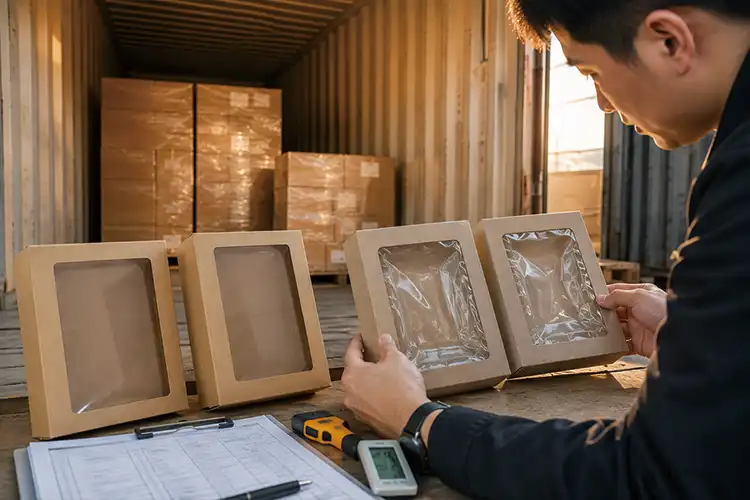
Packaging Performance Testing
Performance matters because packaging must survive production, shipping, storage, and retail display.
Performance During Production
On our automatic window-patching machines, PET is a dream to work with. It boasts excellent dimensional stability, holding its shape perfectly and bonding instantly with standard cold glues.
PLA, however, can be notoriously brittle. If the workshop humidity fluctuates, PLA films often snap or warp during high-speed die-cutting. This instantly spikes the scrap rate and threatens to delay our strict 15-day delivery window, which is a risk most fast-moving brands can't afford.
Performance During Transportation
This is where many overseas buyers make their most expensive mistake: ignoring the 'ocean freight oven effect.' We once handled a project for an artisan food brand shipping from our Guangdong facility to Europe in mid-summer.
Standard sea freight containers easily reach 60°C to 70°C inside. With its low heat deflection temperature 3, the PLA windows literally sagged, lost their tension, and the adhesive failed. PET effortlessly handles those temperature spikes, ensuring your packaging survives the journey intact.
Performance by Packaging Type
| Packaging Type | Preferred Film |
|---|---|
| Chocolate Boxes | PET |
| Luxury Gift Boxes | PET |
| Cosmetic Packaging | PET |
| Organic Food Packaging | PLA |
| Eco-Focused Promotional Packaging | PLA |
For premium chocolate packaging, window film selection is only one part of product protection. I discuss structural design considerations in Luxury Chocolate Gift Box Design: How Inserts, Structure, and Finishes Protect Chocolate Quality?.
The right choice depends on balancing sustainability goals with performance requirements.
When Should You Choose PET or PLA Window Films?
PET is often the better choice when durability, cost efficiency, and recycling access are priorities. PLA is often the better choice when renewable sourcing and sustainability branding play a larger role in the packaging strategy.
Choosing the Right Window Film
There is no universal winner between PET and PLA.
When PET Makes More Sense
Choose PET when:
- Transportation durability is important
- Cost control is a priority
- Product visibility is critical
- Local recycling systems 4 are available
When PLA Makes More Sense
Choose PLA when:
- Renewable materials support brand positioning
- Sustainability messaging is a major marketing goal
- Industrial composting options 5 are available
- Customers actively seek environmentally focused packaging
Questions Buyers Should Ask Before Deciding
| Question | Why It Matters |
|---|---|
| Where will the package be sold? | Recycling systems vary by region |
| How will the package be shipped? | Transportation affects durability needs |
| What sustainability goals does the brand have? | Material choice should support those goals |
| What is the available budget? | PLA generally costs more |
I usually encourage buyers to evaluate the entire packaging system before choosing a window film. Material selection should support product protection, brand goals, customer expectations, and end-of-life disposal options.
Conclusion
PET offers stronger performance and wider recycling access. PLA offers renewable sourcing. The best choice depends on packaging goals.
-
Read the foundational scientific properties and industrial applications of PET from a trusted academic database. ↩
-
Learn exactly what commercial facilities and conditions are required to properly process compostable packaging. ↩
-
Compare the heat resistance of PET and PLA in real packaging applications. ↩
-
Explore global insights on how established recycling infrastructures effectively keep materials in the circular economy. ↩
-
Understand the difference between industrial and home composting for PLA packaging. ↩