跳到内容
跳到内容 
I still remember a pastry brand calling me at midnight — their promotion was next week, but their old supplier hadn’t even started printing.
That’s when I realized “fast turnaround” isn’t just a promise; it’s how a factory manages design, materials, and press time hour by hour.
Lead time for fast turnaround display boxes isn't a fixed number; it's the result of managing design complexity, material sourcing, and supplier efficiency. Understanding this is how brands cut delays.
When time means lost sales, every hour matters. Let’s see how real factories manage to stay fast — and how you can make your orders move quicker.
What Determines the Lead Time of Display Boxes?
Display box lead time typically fluctuates between 7 to 20 days, with the main bottlenecks being material sourcing, complex printing, and assembly stages.
Some clients think any packaging factory can deliver in ten days. I wish it were that simple.
In our plant, we plan every batch by minute — if one client adds foil stamping last minute, it can block the die-cutting line for half a day.
That’s why we invested in three Komori presses — so digital proofing, offset printing, and lamination can run side by side. On a busy week, that saves not 40%, but sometimes three whole working days.
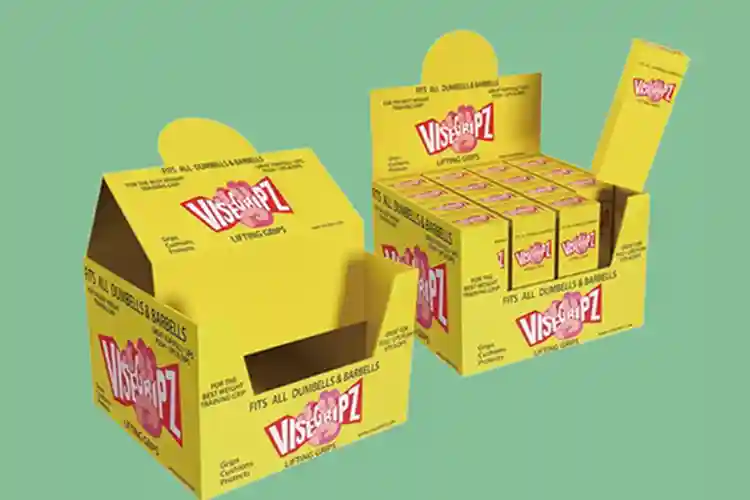
Retail Display Box
Most small brands I meet want short lead time packaging boxes because they need to restock fast or launch seasonal products.
The truth is, lead time is never fixed — it changes with every adjustment you make to structure, coating, or quantity.
Here’s a simplified breakdown I often show to clients during order planning meetings:
Display Box Manufacturing Timeline
| Stage | Description | Average Duration |
|---|---|---|
| 1. Design Proofing | Artwork checking, dieline setup 1, color approval | 1–2 days |
| 2. Material Preparation | Paper sourcing, lamination, cutting | 2–3 days |
| 3. Printing & Finishing | Digital or offset printing, coating, die-cutting | 3–5 days |
| 4. Gluing & Assembly | Folding, pasting, inserting accessories | 2–4 days |
| 5. Quality Check & Packing | Inspection, shrink-wrapping, carton packing | 1–2 days |
| 6. Shipping & Delivery | Depends on location and logistics | 3–7 days |

Lead Time Factors
A simple layout and early proof approval can push the job forward by several days — that’s how our team managed to deliver a skincare counter display order in 9 days instead of 14.
How Can You Speed Up the Production of Custom Display Boxes?
The fastest way to shorten lead time is to simplify finishing, confirm stock materials early, and work with a full-service factory that supports overlapping production.
Fast production is never about pushing workers — it’s about removing small roadblocks before they grow.

Skincare display packaging
Here are five proven steps we use for custom display boxes fast production:
1. Approve designs early
Every extra round of proofing adds 1–2 days. Sending dieline and logo files in CMYK format (not RGB) 2 keeps the pre-press team moving and the print schedule tight.
2. Choose readily available paper
Avoid rare textures or imported boards when deadlines are short. Stick with coated C1S or C2S paper 3 most factories already stock. This step alone can pull your order 3-5 days forward.
3. Use digital printing for small batches
For under 100 units, digital printing 4 cuts waiting time for plates and setup (saving 1 day). It’s ideal for limited launches or trial campaigns.
4. Streamline finishing 5
Gold foil and embossing look great, but both need longer setup, drying, and curing time.
For example, a skincare brand once added embossing after proof approval. The foil supplier delayed two days, and the boxes missed their store opening. If you need speed, go for matte lamination or Spot UV. They dry faster and still look premium.
5. Work with an in-house supplier
Factories with full in-house lines — like our Heidelberg and Komori machines — can overlap processes (e.g., printing day shift, lamination night shift). That’s how we saved three days for a Japanese chocolate brand needing 2,000 display trays before Valentine’s Day.
How Do Rush Orders Work for Display Packaging?
I still get those last-minute calls — one came from a chocolate shop in Tokyo, needing 800 counter displays in six days.
We didn’t sleep much that week. The pre-press team stayed till midnight for color matching 6, while our shipping manager booked FedEx Priority at dawn.
That’s what a rush order really means: real-time proofing, existing stock, and logistics synced to the hour.
When those boxes arrived two days early, the client sent photos of their shelves filled with truffles — that made every hour worth it.
Rush order display packaging isn't magic; it means same-day proof approval, using in-stock materials, and coordinating express logistics 7 by the hour.

RUSH ORDER FLOW
Here’s how a rush production usually runs inside our factory:
Rush Order Flow (Example)
| Step | Action | Time Saved |
|---|---|---|
| Proof approval | Done within hours, not days | 1–2 days saved |
| Material allocation | Use pre-cut or stocked paper | 1–3 days saved |
| Machine scheduling | Prioritize job in queue ("jump the line") | 1 day saved |
| Overnight shipping | Partner express carrier | 2–3 days saved |
For skincare or food display boxes, we often cut total production to six days by printing digitally, skipping foil stamping, and using next-day air freight.
It’s not magic — just coordination, timing, and experience.
FAQs About Fast Turnaround Display Boxes
Why do some factories deliver display boxes faster than others?
Speed depends on how much of the process is done in-house. Factories with their own printing, lamination, and gluing lines save 3–5 days because they don’t rely on (and wait for) subcontractors.
What conditions allow a factory to finish display boxes within 7 days?
Finishing display boxes within 7 days requires three key conditions: 1) immediate design approval (1-pass), 2) use of in-stock materials, and 3) utilizing digital printing to skip plate-making. These steps bypass the most common production delays.
What causes the longest delays in packaging production—and how to avoid them?
The longest delays in packaging production are caused by last-minute design edits, requests for rare imported paper, and slow proof approvals. Avoiding these three bottlenecks is the most effective way to keep a timeline stable.
How to use eco-friendly or recycled paper without extending production time?
Using eco-friendly paper without delays involves choosing coated recycled paper with faster drying properties. Pre-testing ink adhesion on these materials before mass printing is a critical step to prevent rework and keep production on schedule.
How do overseas clients manage tight packaging deadlines with China suppliers?
Overseas clients manage tight deadlines by confirming the production window before booking shipment and syncing updates daily. Using express shipping for physical samples or approving digital proofs via video call are common strategies to save a full week of time.

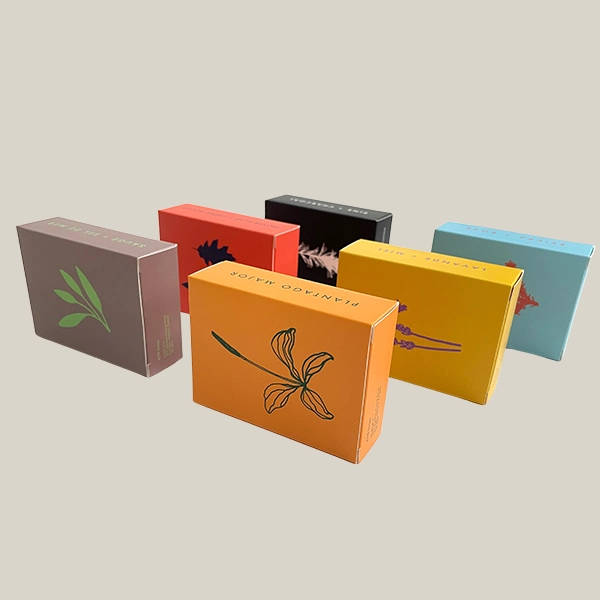
Eco-Friendly Soap Display Box
Conclusion
Meeting tight deadlines is never luck — it’s the result of everyone moving in sync.
I’ve learned that simple designs, fast decisions from the client, and honest updates between buyer and factory make stress disappear.
When boxes ship on time and clients send back photos of their displays, that’s when the word “turnaround” truly means success.
-
Get a step-by-step technical guide on how to properly prepare print-ready dieline files for packaging. ↩
-
Understanding What is CMYK? What it means, what it’s for and when to use it. ↩
-
See a detailed comparison of C1S (Coated 1 Side) and C2S (Coated 2 Sides) paperboard to choose the right one. ↩
-
Understand the definition of digital printing and how its technology differs from traditional offset printing. ↩
-
Explore a complete visual guide to all finishing options (foil, embossing, UV, lamination) to see why some take longer. ↩
-
Learn what the Pantone Matching System (PMS) is and how professionals use it to ensure color accuracy. ↩
-
Get a beginner's guide to international freight, including key terms, documents, and customs processes. ↩