跳到内容
跳到内容 
Many brands claim eco packaging. Many still waste space and cost. I often see cosmetic boxes designed well but failing in real logistics.
Eco-friendly cosmetic packaging depends on structure, insert design, and shipping efficiency, not just recyclable materials or surface appearance.
Choosing the right structure is not simple. Bottles, inserts, and transport all matter. Continue reading below.
What Makes a Cosmetic Packaging Structure Eco-Friendly?
Many buyers focus on paper type. They ignore structure. This leads to packaging that looks eco but performs poorly in real use.
An eco-friendly structure 1 reduces material complexity, supports recycling, and minimizes shipping volume while still protecting the product effectively.
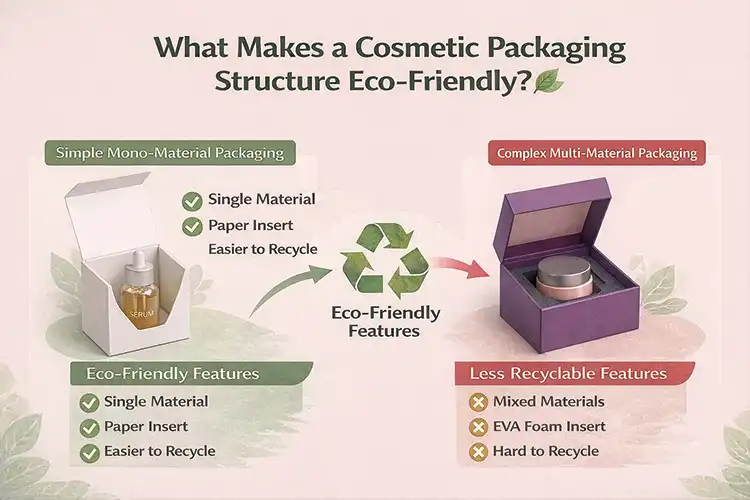
Eco Structure Logic
From a factory view, eco design is a system decision. Material is only one part. Structure, insert, and logistics must work together. In cosmetic packaging, bottles create fixed space requirements. This changes everything.
For skincare and beauty brands, you can also explore our cosmetic packaging solutions to see how structure and insert design are handled in real production.
Key Structural Factors
| Factor | Impact on Sustainability |
|---|---|
| Mono-material design | Easier recycling |
| Insert type | Determines real volume |
| Flat shipping | Reduces logistics cost |
| Weight control | Lowers carbon output |
Practical Observation
I often review packaging files before production. Many designs use recyclable paper. However, they include heavy inserts or oversized boxes. This increases both cost and environmental impact.
A cosmetic box is not empty. It contains a bottle. That bottle defines the minimum space. Any extra space becomes waste.
Are Folding Carton Structures the Most Recyclable Option?
Many brands want a safe eco solution. Folding cartons are often the first choice.
Folding cartons 2 are the most recyclable option because they use paper-based materials and ship flat, reducing both waste and transport volume.
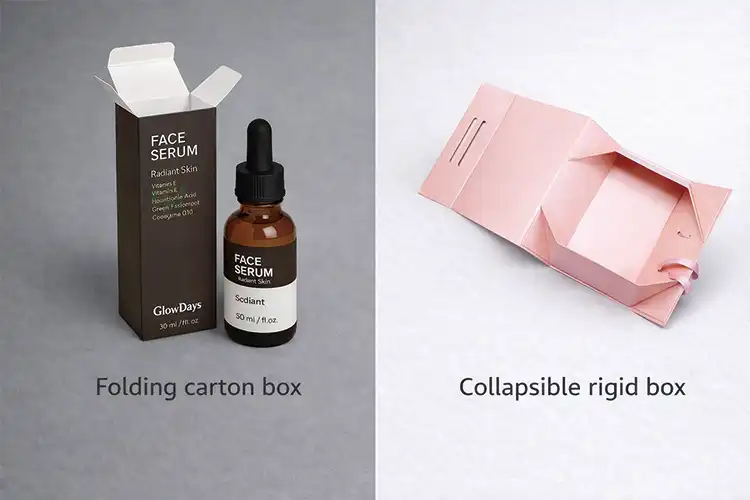
Folding Carton
Folding cartons are efficient. They are simple. They match most cosmetic products with proper insert design.
Structural Advantages
| Feature | Result |
|---|---|
| Paperboard only | High recyclability |
| Flat-packed | Lower shipping volume |
| Lightweight | Reduced emissions |
| Flexible design | Fits different bottle sizes |
Factory Insight
When we switch clients from rigid boxes to folding cartons, the biggest change is not material. It is logistics.
- more units per carton
- faster packing
- lower warehouse space
Application Fit
Folding cartons work best when:
- using paper inserts
- shipping in bulk
- focusing on cost control
They are not always luxury. But they are the most efficient eco structure.
Can Rigid Boxes Be Eco-Friendly in Cosmetic Packaging?
Rigid boxes are common in premium cosmetics. Many brands still want this look.
Rigid boxes3 can be improved for sustainability, but they are not fully eco-friendly due to mixed materials and higher resource usage.
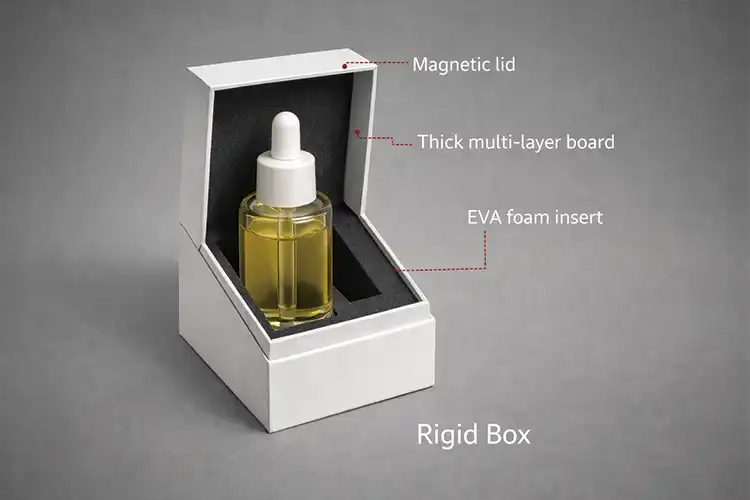
Rigid Box
Rigid boxes create strong visual value. However, they also create structural challenges.
Structural Limitations
- multi-layer board
- glued construction
- common use of EVA or foam inserts
- surface lamination
These factors reduce recyclability.
Optimization Options
| Adjustment | Effect |
|---|---|
| Paper insert replacement | Improves recyclability |
| Reduced thickness | Lower material usage |
| No magnet design | Easier disposal |
| Water-based coating | Better eco profile |
Practical Approach
In real projects, I do not reject rigid boxes. I adjust them.
For example, I often suggest:
- remove plastic inserts
- simplify internal structure
- reduce decorative layers
This keeps brand image while improving sustainability.
Do Collapsible Rigid Boxes Reduce Environmental Impact in Shipping?
Many suppliers promote collapsible boxes as eco solutions. This is only partly true.
Collapsible rigid boxes4 reduce shipping volume in theory, but in cosmetic packaging, inserts often limit this benefit.
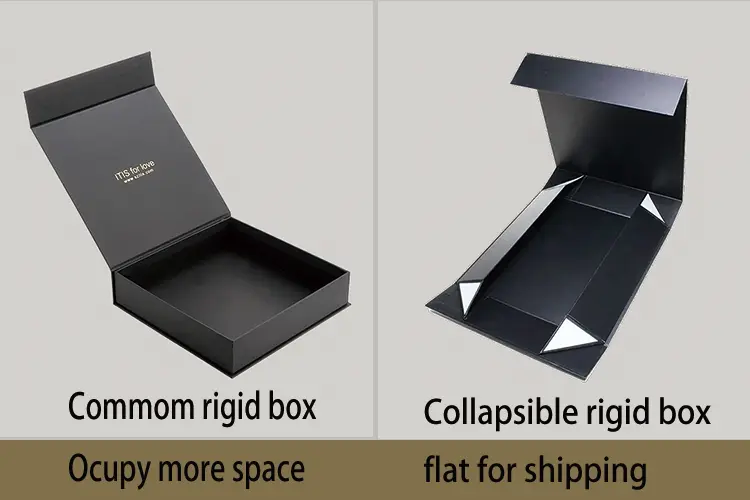
Collapsible Box
This is where real production logic matters. Cosmetic products usually require fixed inserts. These inserts do not collapse.
Insert Impact on Structure
| Insert Type | Collapsibility | Volume Impact |
|---|---|---|
| EVA / Foam | No | High |
| Paper insert | Limited | Medium |
| No insert | Yes | Low |
Structural Reality
Even if the outer box folds, the insert defines the space. The insert usually takes most of the internal volume.
So the total shipping reduction is often smaller than expected.
Factory Conclusion
Collapsible rigid boxes are suitable when:
- insert is flexible or minimal
- product is not fragile
- branding requires premium look
They are less effective for typical cosmetic bottles with rigid inserts.
How Do Paper Tube and Minimalist Structures Support Sustainability?
Some brands move to simpler structures. This is a growing trend in skincare packaging.
Minimalist structures5 improve sustainability by reducing material usage, simplifying components, and improving recyclability.
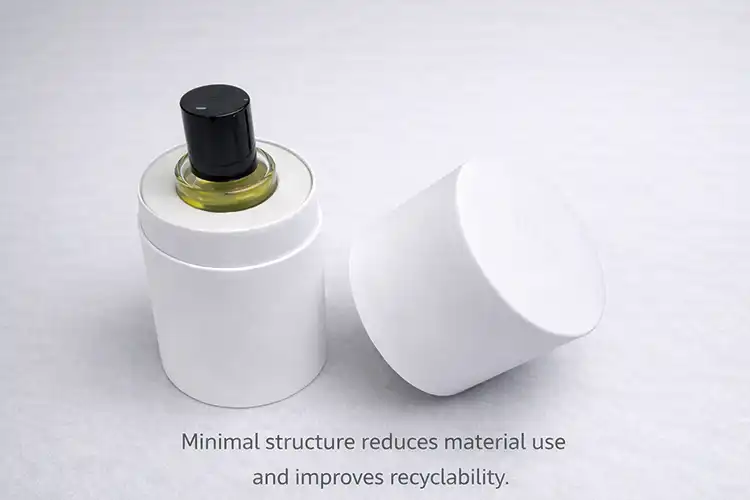
Minimal Packaging
Minimal design removes unnecessary parts. It focuses on function.
Common Minimal Structures
| Type | Use Case |
|---|---|
| Paper tube | Creams, serums |
| Sleeve + tray | Gift sets |
| Single carton | Basic packaging |
Practical Observation
I worked on a project where the client removed the inner tray. We redesigned the structure to hold the bottle directly.
The result:
- lower material usage
- faster packing
- simpler recycling
Minimalism works when structure replaces unnecessary components.
How Should You Choose the Right Eco Packaging Structure?
Many buyers feel confused. There is no single best structure.
The right eco packaging structure6 depends on product protection, insert design, shipping method, and brand positioning.
From a factory side, I always suggest thinking in systems.
Decision Framework
| Condition | Recommended Structure |
|---|---|
| High volume production | Folding carton |
| Premium branding | Optimized rigid box |
| E-commerce shipping | Folding carton or minimal |
| Eco-focused brand | Minimalist structure |
Key Considerations
- Does the insert dominate the volume?
- Can the structure reduce empty space?
- Is recycling practical in target markets?
Choosing structure is not about trend. It is about fit.
What Common Mistakes Do Brands Make in Eco Packaging Design?
Many brands try to be eco. But they miss key points.
Common mistakes include overdesign, mixed materials, and ignoring insert7 impact, which reduce recyclability and increase cost.
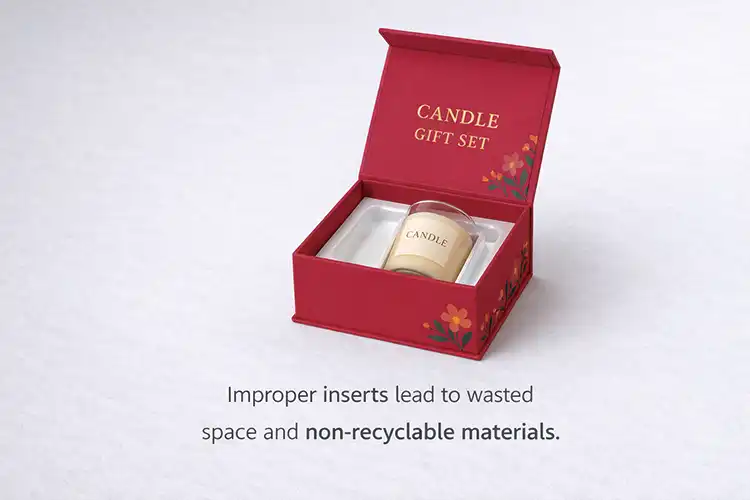
Common Mistakes
Typical Issues
| Mistake | Result |
|---|---|
| Mixed materials | Hard to recycle |
| Oversized box | Waste of space |
| Plastic insert | Lower eco value |
| Ignoring logistics | Higher emissions |
Practical Pattern
I often see “eco packaging” designs that only change paper. The structure remains inefficient.
The real issue is not material. It is system design.
Frequently Asked Questions
What is the most eco-friendly packaging structure for cosmetics?
Folding cartons are generally the most eco-friendly option because they use paper-based materials, are easy to recycle, and ship flat to reduce logistics impact.
Are rigid boxes recyclable or environmentally friendly?
Rigid boxes are less recyclable due to mixed materials, but they can be improved by using paper inserts, removing magnets, and reducing coatings.
What is the best packaging structure for eco-friendly cosmetic brands?
The best structure depends on your product and brand positioning, but folding cartons and minimalist designs are usually the most sustainable choices.
Does eco-friendly packaging cost more for cosmetic brands?
Eco-friendly packaging does not always cost more. In many cases, optimized structures like folding cartons reduce material and shipping costs.
How do I choose the right eco packaging supplier?
Choose a supplier who understands structure optimization, material selection, and logistics efficiency. You can explore more on our eco-friendly packaging solutions.
Conclusion
Eco packaging depends on structure, insert design, and logistics efficiency. The best solution balances recyclability, protection, and real shipping performance.
-
Learn how the EU defines recyclable and sustainable packaging and its key 2030 targets. ↩
-
See real recycling and circularity data for paper and paperboard packaging in Europe. ↩
-
Understand how EU sustainability goals reshape cosmetic packaging choices, including rigid and luxury formats. ↩
-
See practical pros and cons of collapsible rigid boxes, including real savings and hidden trade-offs. ↩
-
Learn how reduction-focused, paper-based packaging supports circular economy goals and reduces plastic pollution. ↩
-
Access Australia’s official Sustainable Packaging Guidelines to structure product, insert, and logistics decisions. ↩
-
Learn real cosmetic packaging mistakes and see how changing structure and inserts improved sustainability. ↩