跳到内容
跳到内容 
Many boxes look perfect before folding. Then cracks appear. I have seen full batches fail because of one wrong decision.
Folding cracks are caused by fiber structures 1, ink coverage, coating, and environment—not just paperboard type.
Most articles explain materials. I explain what happens in real production.
Continue reading below to understand how to avoid costly folding failures.
What Really Causes Folding Cracks in Paperboard?
Many buyers think cracking comes from poor material. This is only part of the truth. In real production, multiple factors work together.
Folding cracks happen when the outer surface cannot stretch under stress, causing fibers and ink layers to break.
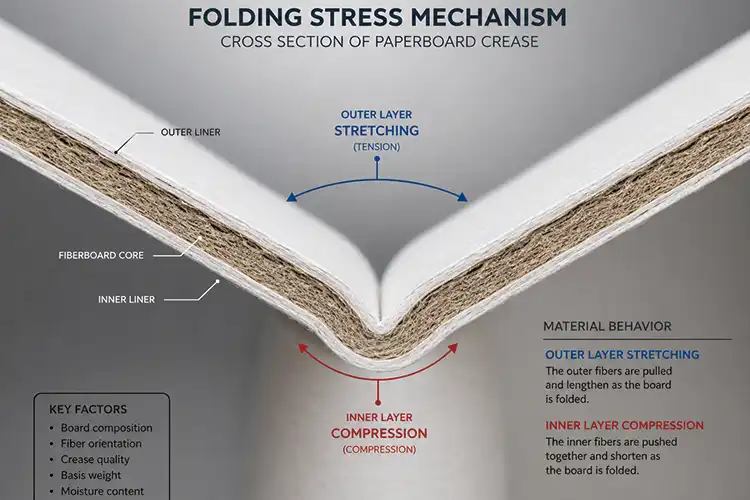
Folding Stress Mechanism
In my factory, I never judge a material alone. I always look at the full system.
The Four Key Factors Behind Cracking
| Factor | What It Affects |
|---|---|
| Material structure | Fiber strength and flexibility |
| Ink coverage | Surface rigidity |
| Coating | Surface protection |
| Environment | Fiber moisture and elasticity |
Why This Matters
I have seen the same material perform perfectly in one job and fail in another.
The difference was not the board.
It was the conditions.
How Stress Works During Folding
When folding happens:
- outer layer stretches
- inner layer compresses
- weak surface breaks
This is where cracking becomes visible 2.
Does CCNB Always Crack During Folding?
Many people believe CCNB always cracks. This is not always true.
CCNB cracking depends on ink coverage, thickness, and environment—not just the material itself.
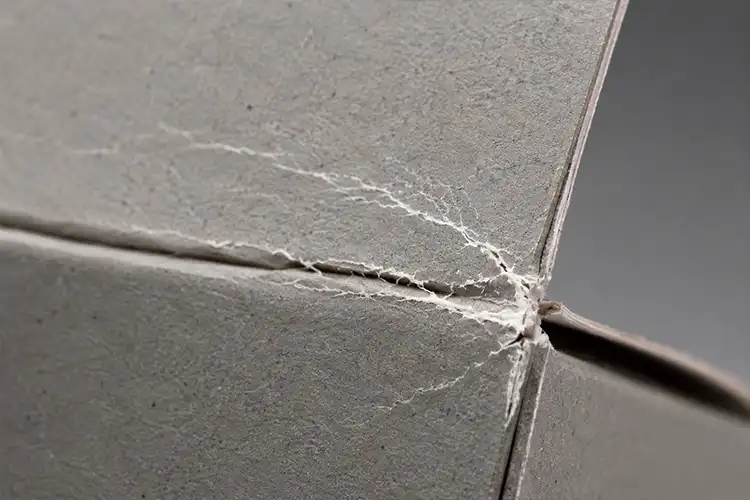
CCNB Folding Result
From what I have seen in production, CCNB behavior changes under different conditions.
When CCNB Performs Acceptably
- thickness around or below 16PT
- low ink coverage
- normal humidity
In these cases, folding can remain clean, even without coating.
When Cracking Becomes Obvious
| Condition | Result |
|---|---|
| 100% ink coverage | visible white cracking |
| dark solid printing | higher surface stress |
| dry environment | brittle fibers |
When ink covers the fold line, the surface becomes rigid. Folding then breaks the fibers and pulls the ink layer apart 3.
How Does FBB Behave Under Folding Stress?
FBB is often seen as a balanced option. In reality, its behavior sits between CCNB and SBS.
FBB offers good stiffness but limited flexibility, which leads to controlled cracking under stress.
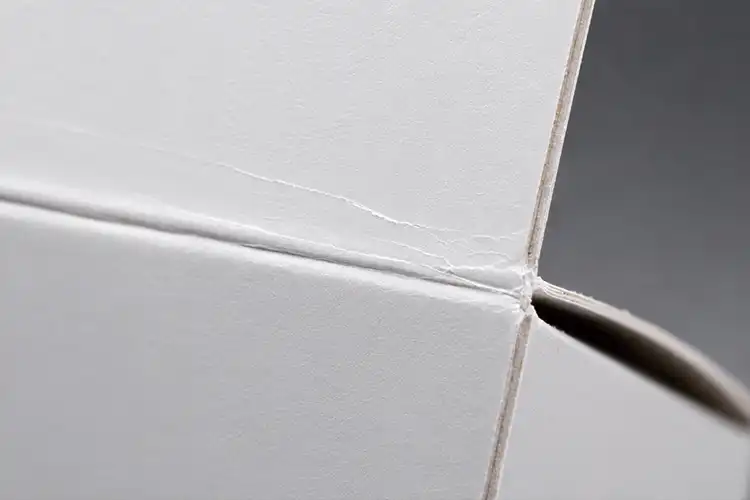
FBB Folding Behavior
In my experience, FBB performs well in normal conditions but shows stress marks under heavy printing.
Typical FBB Performance
- light printing → clean folding
- medium coverage → slight stress lines
- full solid coverage → fine white cracks
Structure Comparison
| Material | Core Structure | Folding Behavior |
|---|---|---|
| CCNB | Recycled pulp | visible cracking |
| FBB | Mechanical pulp core | controlled cracking |
| SBS | Virgin long fiber 4 | minimal cracking |
Key Insight
FBB is stiff but not very stretchable.
This means it holds shape well,
but cannot absorb folding stress as effectively as SBS.
Why Does SBS Perform More Stable in Folding?
Many buyers believe SBS does not crack. This is not completely true, but it performs much better in most cases.
SBS performs more consistently due to stronger fiber bonding and better surface flexibility in premium packaging.
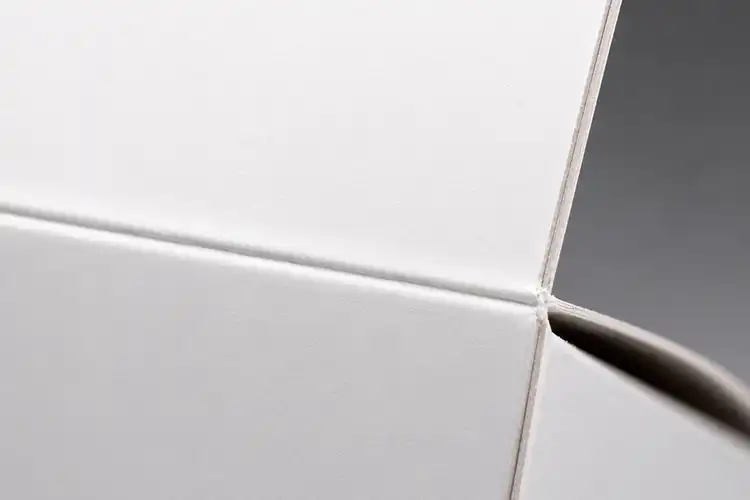
SBS Folding Performance
What Makes SBS Different
- long fiber structure
- uniform surface
- better flexibility
Real Production Comparison
| Material | Result |
|---|---|
| CCNB | strong visible cracking |
| FBB | fine visible lines |
| SBS | clean folding |
Important Reminder
Even SBS can crack under extreme conditions:
- heavy coating
- thick board
- poor creasing
- very dry environment
So the goal is not to find a perfect material.
It is to control the system.
How Does Dry Weather Increase Cracking Risk?
Many buyers ignore environmental conditions. This is a major mistake.
Low humidity reduces fiber flexibility 5, increasing cracking risk—especially for FBB and CCNB.
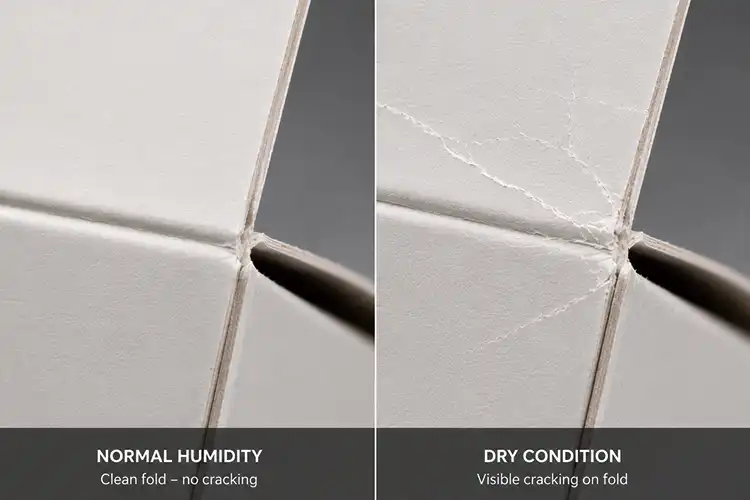
Humidity Impact
I have seen the same job perform differently in different seasons.
What Happens in Dry Conditions
- paper loses moisture
- fibers become brittle
- flexibility drops
Why High GSM Boards Are More Sensitive
| Factor | Effect |
|---|---|
| higher thickness | higher folding stress |
| dry fibers | reduced stretch |
| no coating | no protection |
This is why thick FBB or CCNB cracks more easily in dry production environments.
Real Observation
I have seen one batch run perfectly one week,
and fail the next.
The only difference was humidity.
How Should You Choose Between SBS, FBB, and CCNB?
Many buyers start with price. I start with usage.
Material selection 6 should match printing design, folding stress, and environment—not just cost.
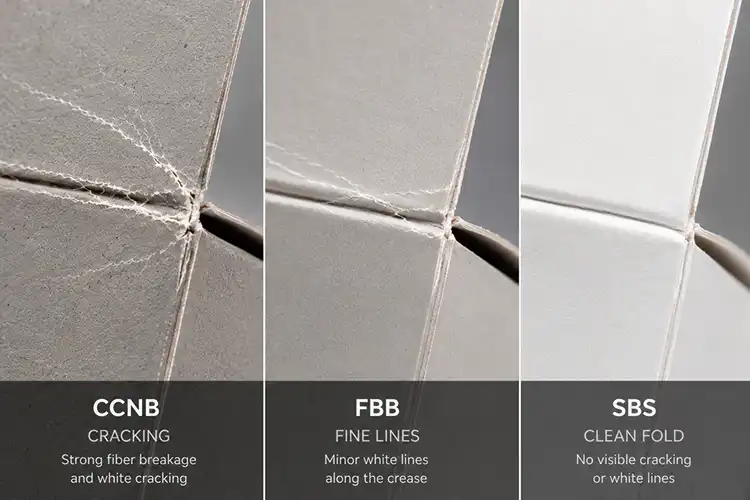
Material Selection Guide
Practical Selection Table
| Scenario | Recommended Material |
|---|---|
| premium branding | SBS |
| balanced cost | FBB |
| low-cost mass production | CCNB |
My Selection Logic
I always ask:
- Will the design use full solid printing?
- Will folds cross dark areas?
- What is the production environment?
Because in real production:
The artwork and environment change the material behavior.
Conclusion
Folding cracks result from material, ink, process, and environment. Choosing the right board reduces defects and ensures stable production.
-
Learn how fiber structure affects paperboard flexibility and folding performance. ↩
-
See practical methods to reduce score cracking during carton production. ↩
-
Understand how printing coverage increases cracking risk during folding. ↩
-
Learn how virgin fiber structure improves paperboard strength and flexibility. ↩
-
Discover how moisture levels affect paperboard flexibility and fold quality. ↩
-
Learn how paperboard structure affects folding performance and packaging quality. ↩